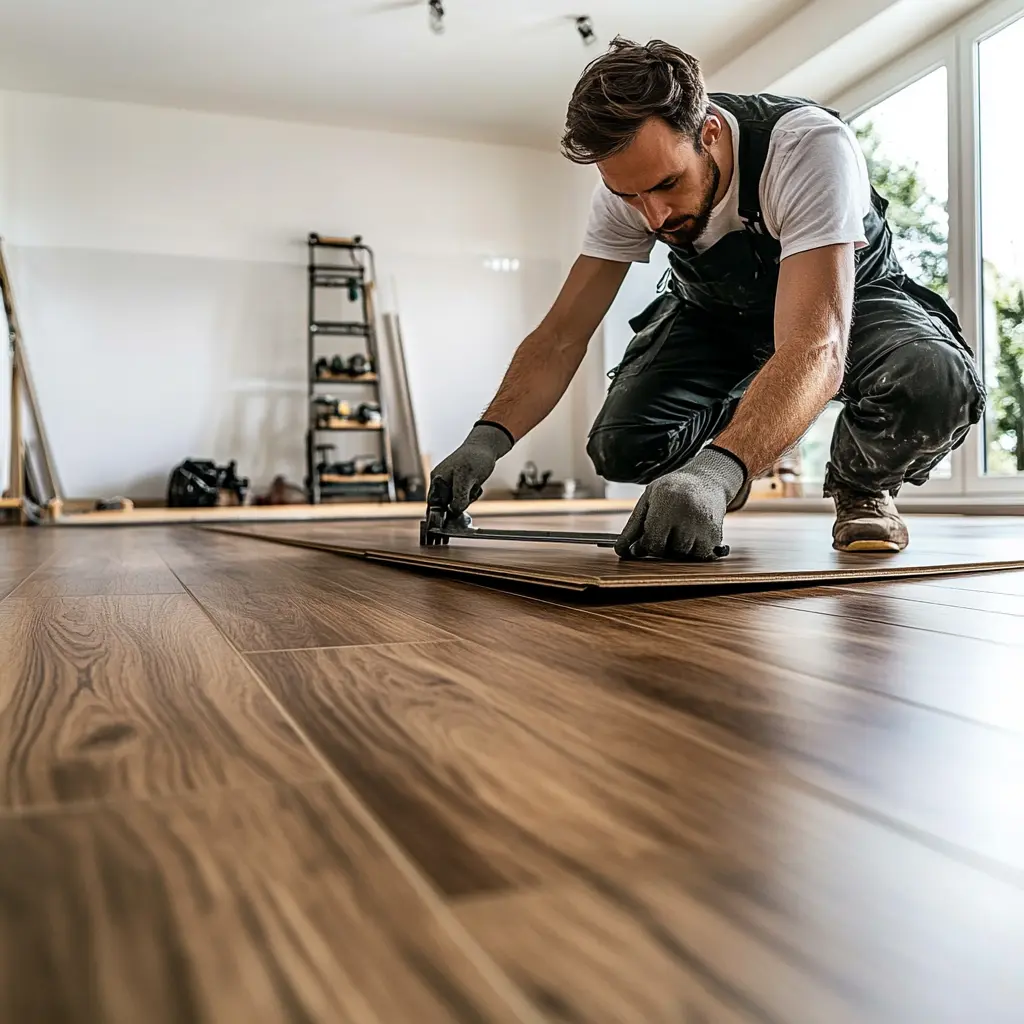
20 Pro Suggestions For Picking Floor Installation
Wiki Article
Nail Up Vs. Glue Down Vs. Floating Hardwood Explained
Find three flooring contractors in Philadelphia how hardwood should be put in and you'll get three distinct responses -- not because they are incorrect, but due to the fact that the right installation technique will depend on the particulars of your house. The type of subfloor used, the levels of the floor, wood species, the conditions of moisture, and your long-term plans for the area all factor into the choice. The majority of homeowners will only be aware later which is why it's important to be aware of the differences before you begin getting estimates. This article will explain how each method performs and how each is appropriate.
1. Nail-Down is the Standard for Solid Hardwood
Nail-down construction, sometimes called staple-down -- involves the mechanical attachment of each plank of hardwood on a wood subfloor by using the pneumatic nailer. It's the oldest method and is still the most popular method of installing solid hardwood in Philadelphia homes with plywood or OSB subfloors. The connection is secure, the floor feels solid beneath your feet and there's not a single glue to fail over time. The majority of flooring contractors opt to nailing-down solid hardwood in above-grade wood subfloors, without thinking twice.
2. Your Subfloor Determines Whether Nail-Down is even a possibility
Wood flooring that nails down hardwood needs a wooden subfloorwhich is full stop. Concrete slabs, that are found in basements as well as in some ground-floor zones of Philadelphia homes as well as Delaware County ranches, cannot take staples or nails in any meaningful way. If your subfloor is constructed of concrete, nail-down is off the table regardless of what flooring material you'd like to install. An experienced flooring installer with a license will know this in the first site visit; an inexperienced one might not know until the project has begun.
3. The Glue-Down System Opens Concrete Slab Installations
Glue-down hardwood installation is the full-spread adhesive which is applied to the subfloor prior to planks being set in place. It's the ideal option if you're looking to install real hardwood over concrete -- basements in Montgomery County colonials, ground-floor slabs in newer South Jersey construction, or any other area where nailing down isn't viable. Done correctly, a glue-down floor is extremely strong and has minimal flex. The downside is that removal later requires a lot more effort as compared to removing a nailed flooring or floating one.
4. The floating Hardwood Isn't Connected to the Subfloor in any way
Floating installation refers to the fact that the planks connect at their edges, and are essentially placed on the subfloor's surface like the same surface. They move as a unit rather than being fixed in place. It's easier to install, easier to get rid of, and better able to withstand subfloor imperfections than nail-down. Engineered hardwood is by far the most popular alternative for floating installation in Philadelphia since its layered structure is able to handle any slight movement of floating installations better than solid wood does.
5. Floating floors offer a distinctive sensation underfoot
This is something that visits to showrooms aren't always able to convey. It's not uncommon for floating hardwood to have a slight movement when you walk over it. It's nothing dramatic or noticeable, but it's noticeable compared to an unlocked nail-down floor which is nailed in place to the floor. For most homeowners, it's minor issue. Some, in particular those who are upgrading from nail-down wood flooring, it's a process of adjustment. If you're worried think about it, ask your flooring professional whether you could walk by a sample of the floating floor prior to taking a decision.
6. Nail-Down carries the greatest labor costs of three
From an installation standpoint nailing down hardwood takes long and takes the most effort, which is reflected in the labor quotes you'll get from Philadelphia flooring contractors. The subfloor should be clean, flat, and properly thick. Planks must be acclimatized. The nailer is a delicate process for avoiding splitting. Flooring installers who nail-down efficiently are earning their fees. If you come across a inexpensive hardwood installation estimate consider asking what they're going to do to fix it.
7. Glue Down increases material costs however it saves some labor Variables
Adhesive can be expensive, and glue-down installations require the right product matched to the particular hardwood and subfloor combination. In the end, glue-down construction over a properly prepared concrete slab may be quicker than nailing over subfloors that need major repair. Flooring contractors from Bucks County and Delaware County generally recommend glue-down on engineered wood for slab-on floors specifically since it brings real aesthetics of wood with practical advantages.
8. It is recommended to conduct a moisture test prior to any Method is selected.
This step is sometimes skipped in budget jobs, and leads to issues within a year. Concrete slabs exude moisture vapor in excess, and this can cause glue-down glue to fail,, and the floors floating to break. Wood subfloors found in older Philadelphia rowhomes may be prone to higher levels of moisture in crawlspaces due to inadequate ventilation. A reliable moisture reading prior to installation isn't an option -- it's how a competent flooring contractor can determine which method is safe, and what preparatory work is required before.
9. Refinishing Compatibility Varies by Method
Solid hardwood that is nail-down can be sanded a few times during its lifespan- it's one of the main arguments in favor of it despite its higher cost of installation. Glue-down engineered hardwood can usually have a refinishing process once or twice based on the wear layer thickness. The floating engineered hardwood could contain a few refinishing possibilities. If long-term floor maintenance is one of your goals be sure to consider this in your process before installing, not later.
10. The Correct Method Is an a Site-Based Decision, not a Preference A Decision
Owners of homes often go to flooring consultations with an plan of the type of installation they want. A seasoned flooring contractor in Philadelphia will gently guide the discussion to what the home's structure actually supports. The best flooring contractors aren't selling a method they prefer -They're taking a look at your subfloor's moisture levels at your floor, along with the type of wood and recommending accordingly. This specific site-specific evaluation is what separates a qualified professional in comparison to someone who is just a user of a nailer. Take a look at the top
hardwood floor installation Bucks County for site info including flooring contractors Montgomery County PA, LVP floor installation cost Philadelphia, solid hardwood floor installation Philadelphia, luxury vinyl plank installation Philadelphia, flooring contractors Philadelphia PA, hardwood floor refinishing Philadelphia, flooring contractors Bucks County, custom hardwood staining Philadelphia, tile flooring contractors Philadelphia PA, floor installation Bucks County PA and more.

Serving Bucks, Montgomery & Delaware County How To Serve Bucks, Montgomery & Delaware County?
Homeowners living in the Philadelphia suburbs generally assume the flooring contractors that are located in Philadelphia don't need to travel or that local county contractors are the best choice for jobs in their particular area. In reality, it's more nuanced. The top flooring installers that serve the area have an ability to seamlessly work within Philadelphia, Bucks County, Montgomery County, Delaware County, and into South Jersey because the demand across the metro area is interconnected, and the housing stock has enough common characteristics to make regional experience a valuable asset. What's different between these regions that are housing types building eras, subfloor conditions and neighborhood aesthetics is something you should consider before you begin pulling names from an internet search result, and then assuming that geography is the only reliable quality filter.
1. Each County has its own dominant housing profile
Bucks County skews toward older townhouses in towns like Doylestown and Bristol alongside newer suburban construction further north. Montgomery County mixes mid-century colonials and ranches alongside affluent Main Line properties that have distinct plans for renovation. Delaware County has dense inner-ring suburbs, with rowhome-adjacent older housing in close proximity to the city but it is transforming into more spread-out residential developments as you move to the west. These differences are relevant to flooring because the subfloor conditions, construction methods, as well as the moisture profiles vary meaningfully by area and era of constructionthe contractor who is knowledgeable about the area will be able to recognize these patterns and doesn't need to have them explained.
2. Subfloor Conditions differ in significant ways across the County
An older Delaware County homes close to the Philadelphia border (e.g. Darby, Upper Darby, Lansdowne -- frequently share the same subfloor conditions, as well as the moisture issues prevalent in city rowhomes. Bucks County properties further from the urban core usually have more stable subfloors in recent builds but more severe moisture problems in older houses near their location along Delaware River. There are many Main Line homes can have original hardwood flooring on subfloors that aren't being refinished in 60 years. Flooring contractors who have worked across all three counties will recognize the pattern and can set prices accordingly, instead of being astonished on the job.
3. Hardwood Flooring Expectations Are Through the Main Line
The Montgomery County's Main Line corridor -- Bryn Mawr, Haverford, Wayne, Ardmore -- is a place where renovations are a priority and hardwood flooring quality standards are particular. People who live in these areas usually request wide plank white oak in custom staining tailored to cabinetry and millwork, and refinishing work that meets a high aesthetic standard. Flooring contractors who provide Montgomery County regularly understand that the standards for finish quality at these locations is higher than what you would expect from a suburban remodel, so they will staff and prepare accordingly.
4. Bucks County's newer construction creates Different Installation Conditions
Newer developments for residential construction in Bucks County -- particularly in Warminster, Horsham, and areas further north -- are typically open-plan with more square feet, slab-ongrade construction in certain areas, and subfloors that are much better than older local housing. LVP flooring is especially appropriate for the newer Bucks County homes: the greater area benefits from LVP's cost-effectiveness, open-plan layouts work well for floating installation and slab-grade floors make waterproof flooring an ideal requirement in the main living areas.
5. Delaware County's Inner Suburbs share Philadelphia's flooring problems
Flooring contractors who are familiar with Delaware County well will tell you that homes located in Upper Darby, Drexel Hill and Havertown contain identical subfloor requirements as Philadelphia in general -- boards subfloors and moisture from aging foundations, and wood that was last touched decades ago. Restoration of floors of these zones is in constant demand because the existing housing stock has hardwood floors that have survived for long enough to warrant conserving, but it's been neglected for a long period of time and appears like it's not. Achieving that right evaluation requires an expert who can tell the difference between a floor that requires being refinished or replacement.
6. South Jersey Serves as a natural extension of the Philadelphia Market
South Jersey -- Cherry Hill, Voorhees, Moorestown, Haddonfield and surrounding areas comprise the real Philadelphia flooring market even though it's situated across the state line. Many Philadelphia-area flooring contractors are licensed in both Pennsylvania as well as New Jersey and service South Jersey frequently. Homeowners in South Jersey searching for flooring installers shouldn't restrict their search to New Jersey-only contractors -- the regional pool of experienced flooring professionals includes many Philadelphia-based and Pennsylvania-suburban companies who cross the river routinely.
7. Service Area and Travel Fees Policy are subject to change. for details upfront
Some flooring companies in Philadelphia offers services across all three counties and not every local contractor covers all three counties. Some use travel surcharges on jobs beyond a certain distance from their facility; other include it in their price without revealing it in separate. If you're getting flooring estimates in Bucks, Montgomery, or Delaware County, ask specifically whether the price includes a additional service or travel costs. An individual contractor who is honest regarding this upfront is handling the business relationship professionally. The one who discusses it after a contract meeting may not be so.
8. Permit Requirements Can Differ by Municipality
Pennsylvania registration of home improvement contractors applies statewide, but individual municipalities in Bucks, Montgomery, and Delaware County sometimes have their specific permit or registration requirements for contractors working within their boundaries. It's less prevalent specifically for flooring than construction work, but you should confirm with your contractor that they're aware of specific requirements of your township or Borough. Flooring installers licensed by the state who work often across the region know what municipal requirements are specific to each municipality they can include in their plan without prompting.
9. Regional Contractors establish networks that Profit Customers
It is a flooring specialist who's had experience in Philadelphia and nearby counties for a number of years has relationships with suppliers that include subcontractor network networks, supplier relationships, and professionals who have connections unlike a smaller or more narrowly local operator doesn't. This is particularly important when a job uncovers some subfloor issues that require an experienced carpenter, or when an individual hardwood species requires immediate access, or if an installation requires the services of a waterproofing expert. The best flooring contractors in the region have nodes within a professional network, not individuals working on their own -- and their customers gain from this connections when unexpected circumstances arise during the project.
10. The most reliable regional contractor is the one who understands your Home's Specific Type
County boundaries aren't as significant in comparison to the type of home you've been familiar with when it comes to flooring. A contractor who has done fifty refinishing jobs on hardwood before the outbreak of war Delaware County colonials knows things about these floors than a contractor who works on modern Bucks County construction does not -and the reverse is true. When you're evaluating flooring companies throughout this region, you should ask specifically about their experience working with homes of a particular vintage or construction style, not just their general service area. Answering that question will reveal more about whether they're the best fit for the job, more so than a plan of where they're willing to drive. Check out the top See the best luxury vinyl flooring Philadelphia for more tips including affordable flooring installation Philadelphia, hardwood flooring Philadelphia, nail down hardwood flooring Philadelphia, kitchen tile flooring Philadelphia, wood floor restoration Philadelphia, custom hardwood staining Philadelphia, LVP flooring Philadelphia PA, flooring estimate Philadelphia, laminate flooring installation Philadelphia PA, flooring installers Philadelphia and more.